10 Key Insights Into the Controversy Over Math’s Foundational Axiom
Mathematics is built on proofs—chains of logical reasoning that connect one truth to another. But at the very foundation, we encounter a startling reality: not everything can be proved. Every proof relies on unprovable assumptions, called axioms. Among these, one axiom has sparked decades of debate, dividing mathematicians and philosophers alike. Often called math’s final axiom, it is the Axiom of Choice. This article unpacks ten essential facts about this controversial principle, from its origins to its modern implications. Whether you’re a math enthusiast or a curious learner, these insights will illuminate why this axiom remains both indispensable and divisive.
1. What Is an Axiom? The Unquestionable Starting Point
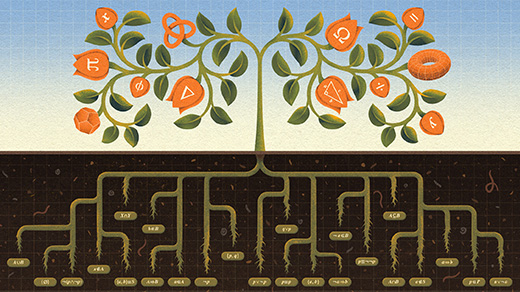
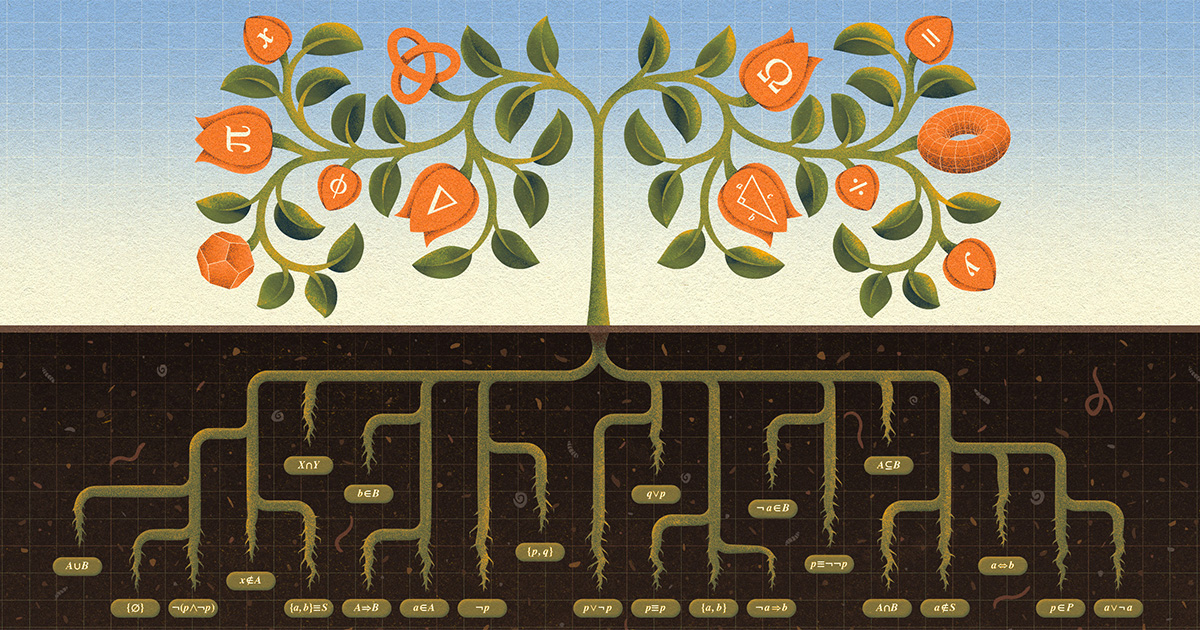
At the base of every mathematical system lie axioms—statements accepted as true without proof. They serve as the bedrock from which all theorems are derived. Imagine building a house: you need a solid foundation that you don’t question every time you lay a brick. In math, an axiom is that foundation. For centuries, mathematicians assumed axioms were self-evident truths. But in the early 20th century, discoveries like non-Euclidean geometry shattered this view. Today, axioms are chosen for their usefulness and consistency, not their obviousness. The Axiom of Choice, introduced by Ernst Zermelo in 1904, was one such choice—and it ignited a firestorm of controversy.
2. The Axiom of Choice: A Simple Statement with Radical Consequences
The Axiom of Choice (AC) states that for any collection of non-empty sets, you can pick one element from each set, even if you have no rule for doing so. At first glance, this seems trivial—after all, you can just reach in and grab something. But the catch is that the collection could be infinitely large, and there might be no way to describe a selection rule. AC says such a choice exists, but it doesn’t tell you how to make it. This non-constructive nature is what troubles many mathematicians. For some, it feels like magic; for others, it’s a necessary tool for proving important theorems in analysis and topology.
3. Zermelo’s Bold Move: Using AC to Prove the Well-Ordering Theorem
In 1904, Ernst Zermelo used the Axiom of Choice to prove the Well-Ordering Theorem, which says every set can be well-ordered (i.e., arranged so that every non-empty subset has a least element). This was a shocking claim because it implied that even the real numbers, which are notoriously messy, could be ordered in a tidy way. Critics immediately objected: the proof didn’t provide an actual ordering—it just asserted one existed. The controversy was so intense that the mathematical community split into factions. Zermelo responded by formalizing set theory into what later became ZFC (Zermelo-Fraenkel set theory with Choice), cementing AC as a central axiom.
4. The Surreal Consequences: The Banach–Tarski Paradox
Perhaps the most famous consequence of AC is the Banach–Tarski paradox (1924): using AC, you can take a solid ball in three-dimensional space, cut it into a finite number of pieces, and reassemble those pieces into two identical copies of the original ball. This seems to violate conservation of volume, but it doesn’t because the pieces are so “wild” they have no defined volume. The paradox shocked even hardened mathematicians. Critics argued that any axiom leading to such a counterintuitive result must be flawed. Supporters countered that the paradox shows the richness of mathematics and that intuition must adapt to formal logic. This remains the poster child for AC controversy.
5. Independence: AC Can Neither Be Proved Nor Disproved
In 1963, Paul Cohen proved that the Axiom of Choice is independent of the other axioms of Zermelo-Fraenkel set theory (ZF). This means you can accept AC or reject it without creating a logical contradiction. Cohen used a technique called forcing, which earned him a Fields Medal. His work showed that mathematics can coexist peacefully with both choice and no-choice worlds. The result deepened the controversy: if AC is optional, why should we accept it? The decision becomes pragmatic—it depends on which theorems you want to keep. Without AC, many areas of mathematics, like functional analysis and measure theory, become much weaker.
6. The Pro-Choice Camp: Why Mathematicians Embrace AC
Most mathematicians today accept the Axiom of Choice because it simplifies their work and enables powerful results. For instance, without AC, you cannot prove that every vector space has a basis, that the product of compact spaces is compact (Tychonoff’s theorem), or that every field has an algebraic closure. In analysis, the Baire category theorem and Hahn–Banach theorem rely on AC. Supporters argue that mathematics is about exploring structures, and AC provides a consistent framework for doing so. They view the paradoxes as interesting, not disqualifying. In fact, the majority of published mathematics implicitly or explicitly uses AC.
7. The Opposition: Constructivism and Alternative Axioms
Opponents of AC often adhere to constructivism, a philosophy that insists mathematical objects be explicitly constructed. For them, AC’s non-constructive existence is unacceptable. Mathematicians like L.E.J. Brouwer and Errett Bishop developed alternative foundations that avoid AC. Others explore set theories that include a weaker choice principle, such as the Axiom of Countable Choice, or even a negation of choice called the Axiom of Determinacy. These alternatives lead to different mathematical universes—for example, every set of real numbers becomes Lebesgue measurable, eliminating Banach–Tarski but also losing some classical results. The debate reflects deeper differences about what mathematics should be.
8. The Philosophical Wrangle: Realism vs. Formalism
The AC controversy is not just mathematical—it’s philosophical. Realists (Platonists) believe mathematical objects exist independently and that axioms are discovered, not invented. For them, AC is either true or false, and we must determine which. Formalism, championed by David Hilbert, views mathematics as a game of symbols with no inherent meaning; axioms are rules chosen for convenience. Formalists are comfortable using AC as long as it’s consistent. Intuitionists, like Brouwer, reject AC because it violates the principle that existence requires construction. The clash between these views fuels ongoing debates in the philosophy of mathematics.
9. Modern Perspectives: AC in the 21st Century
Today, the Axiom of Choice is widely accepted, but its status is nuanced. Most textbooks include it without comment. However, research in set theory examines models where AC fails, exploring the logical landscape. Mathematicians like Hugh Woodin work on extensions of set theory (e.g., the Ultimate L conjecture) that might resolve some of the independence issues. Computer science has also found AC useful in areas like theoretical computing and database theory. Yet the ghost of Banach–Tarski lingers—every new paradox reignites the debate. In classrooms, AC is often introduced with a cautionary note about its “non-constructive” nature.
10. The Legacy: What the Controversy Teaches Us About Mathematics
The story of the Axiom of Choice is a testament to the evolving nature of mathematical truth. It shows that axioms are not eternal truths but pragmatic choices that shape entire fields. The controversy forced mathematicians to confront foundational questions: What does it mean to exist in mathematics? Should theorems be constructive? How do we handle infinity? The AC debate also highlighted the role of human intuition—how often our gut feelings clash with formal logic. Ultimately, the controversy over math’s final axiom has enriched the discipline, leading to deeper understanding of sets, consistency, and the very fabric of mathematical reality.
In conclusion, the Axiom of Choice remains both a pillar and a lightning rod in mathematics. Its acceptance revolutionized analysis and topology, while its critics continue to explore alternative foundations. The controversy is far from settled, but that’s precisely what makes mathematics vibrant. As you explore this topic further, remember that every proof rests on some initial choice—and sometimes the choice itself is the most interesting part. Visit our overview of axioms or dive deep into the Banach–Tarski paradox for more. The final axiom may be controversial, but it is certainly far from final.