BYD's Song Ultra EV Embarks on Record 2,700-Mile Journey to Validate Revolutionary Battery and Ultra-Fast Charging
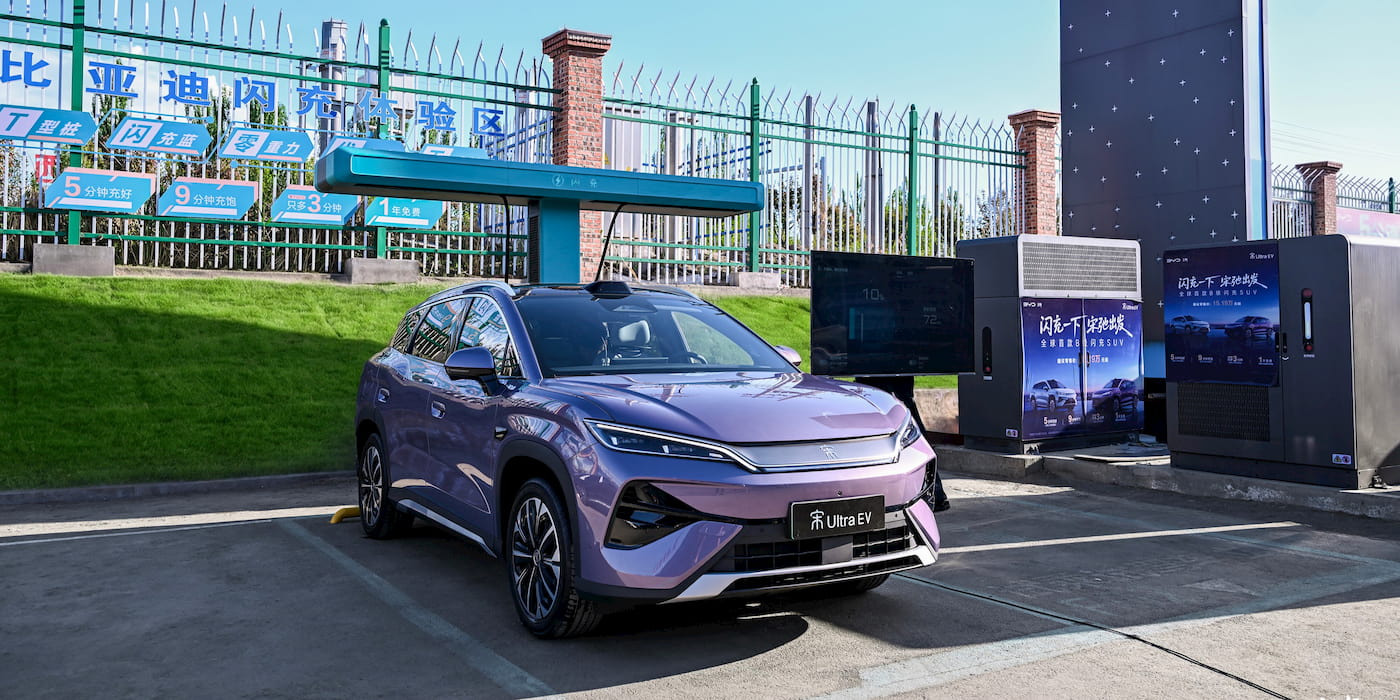
China's electric vehicle leader BYD is pushing the boundaries of EV capability with an ambitious real-world test. The company's new Song Ultra EV, equipped with the latest-generation Blade Battery and a groundbreaking 5-minute Flash Charging system, will traverse over 2,700 miles (4,395 km) along China’s longest expressway. This journey marks the first time any electric vehicle has attempted to complete the full route, serving as a rigorous validation of BYD's advanced powertrain technology. Below, we explore the key aspects of this bold demonstration.
What is the purpose of BYD's 2,700-mile journey with the Song Ultra EV?
The primary goal of this unprecedented road trip is to prove the real-world viability of BYD’s new battery and charging technologies. By driving the Song Ultra EV across China's longest expressway—a distance of 2,700 miles (4,395 km)—BYD aims to demonstrate that its latest Blade Battery can deliver consistent, long-range performance under actual driving conditions, including varied terrain, traffic, and weather. Additionally, the journey tests the 5-minute Flash Charging system, which promises to eliminate range anxiety by drastically reducing charging stops. Successfully completing the entire route without issues would send a powerful message to consumers and competitors alike: that EVs can now match or exceed the convenience of gasoline vehicles for long-distance travel. The test also serves as a marketing milestone, showcasing BYD’s commitment to innovation and setting a new benchmark for the industry.
How does the new Blade Battery differ from previous versions?
BYD’s new-generation Blade Battery retains the distinctive long, thin cell shape that gives it its name, but incorporates significant improvements in energy density and thermal management. Compared to the original Blade Battery launched in 2020, the updated version uses advanced materials and cell chemistry to pack more energy into the same physical space, extending the Song Ultra EV’s range. Importantly, the battery still prioritizes safety: the blade cell design inherently resists thermal runaway, and the new version includes enhanced cooling channels to manage heat during ultra-fast charging. BYD claims the battery can now accept a much higher charging current without overheating, directly enabling the 5-minute Flash Charging capability. The battery also benefits from improved cycle life, meaning it can endure more charge-discharge cycles before significant degradation. Overall, the new Blade Battery represents a leap forward in both performance and safety, addressing two of the biggest consumer concerns: range and fire risk.
What is the 'Flash Charging' technology and how fast is it?
Flash Charging is BYD’s proprietary ultra-fast charging system that can replenish the Song Ultra EV's battery from 10% to 80% in just over 5 minutes. This is achieved through a combination of the high-capacity Blade Battery, which can safely accept extremely high currents, and an upgraded charging infrastructure (BYD’s own flash charging stations) that delivers up to 1,500 volts and 1,000 amps. The technology relies on advanced power electronics to manage heat dissipation and prevent battery damage during rapid energy transfer. In comparison, most current fast chargers take 20-30 minutes for a similar capacity boost. This near-gas-station refueling speed is a game-changer for long-distance EV travel, as it minimizes downtime and makes cross-country trips far more practical. BYD has positioned Flash Charging as the key to finally overcoming one of the biggest barriers to EV adoption: charging time.
What route is the Song Ultra EV taking for this test?
The Song Ultra EV is traveling the entire length of the G30 Lianyungang–Khorgas Expressway, which stretches over 2,700 miles (4,395 km) from the eastern coastal city of Lianyungang to Khorgas on the western border with Kazakhstan. This is China’s longest expressway and one of the longest in the world, traversing diverse landscapes including plains, mountains, and arid regions. The route passes through major cities such as Zhengzhou, Xi’an, Lanzhou, and Ürümqi, along with numerous smaller towns and rural areas. By choosing this challenging path, BYD ensures the battery and charging system are tested under extreme variations in temperature, altitude, and road conditions. The trip also relies on a network of BYD’s newly built flash charging stations strategically placed along the expressway, which are critical for the 5-minute charging claim to hold true throughout the journey.

What challenges does the Song Ultra EV face on this long-distance drive?
The 2,700-mile journey presents several significant obstacles. First, the expressway includes high-altitude segments where thinner air can affect battery cooling and motor efficiency. Second, temperature swings from hot deserts to cold mountain passes may stress the battery’s thermal management system. Third, the availability and reliability of BYD’s flash charging stations along the route is unproven—any station malfunction or insufficient power supply could derail the schedule. Fourth, traffic congestion near cities could interrupt optimal charging patterns and increase energy consumption. Fifth, the sheer number of rapid charge cycles (likely 15–20 over the trip) will test the battery’s long-term durability under extreme stress. BYD engineers are also contending with real-world variables such as wind resistance, payload weight, and driver behavior that lab tests cannot fully replicate. Overcoming these challenges successfully would provide compelling evidence that the technology is ready for mass adoption.
What does this achievement mean for the future of electric vehicles?
If BYD completes the 2,700-mile journey without major hiccups, it could fundamentally shift perceptions of electric vehicle practicality. The combination of a long-range battery and 5-minute charging addresses the two biggest hurdles: range anxiety and refueling time. Such a demonstration would pressure other automakers to accelerate their own ultra-fast charging solutions, potentially standardizing charging speeds across the industry. It could also spur governments and private companies to invest more heavily in ultra-fast charging infrastructure, making long-distance EV travel as convenient as gasoline cars. Additionally, the test validates BYD’s Blade Battery safety reputation, boosting consumer trust in EV technology. In the broader picture, this achievement could accelerate the global transition to electric mobility, reducing reliance on fossil fuels and lowering carbon emissions. For BYD itself, it cements its position as a technology leader in the competitive EV market, challenging rivals like Tesla and Chinese startups.