Google Antigravity 2.0: Your Questions Answered About the Agent-First Development Platform
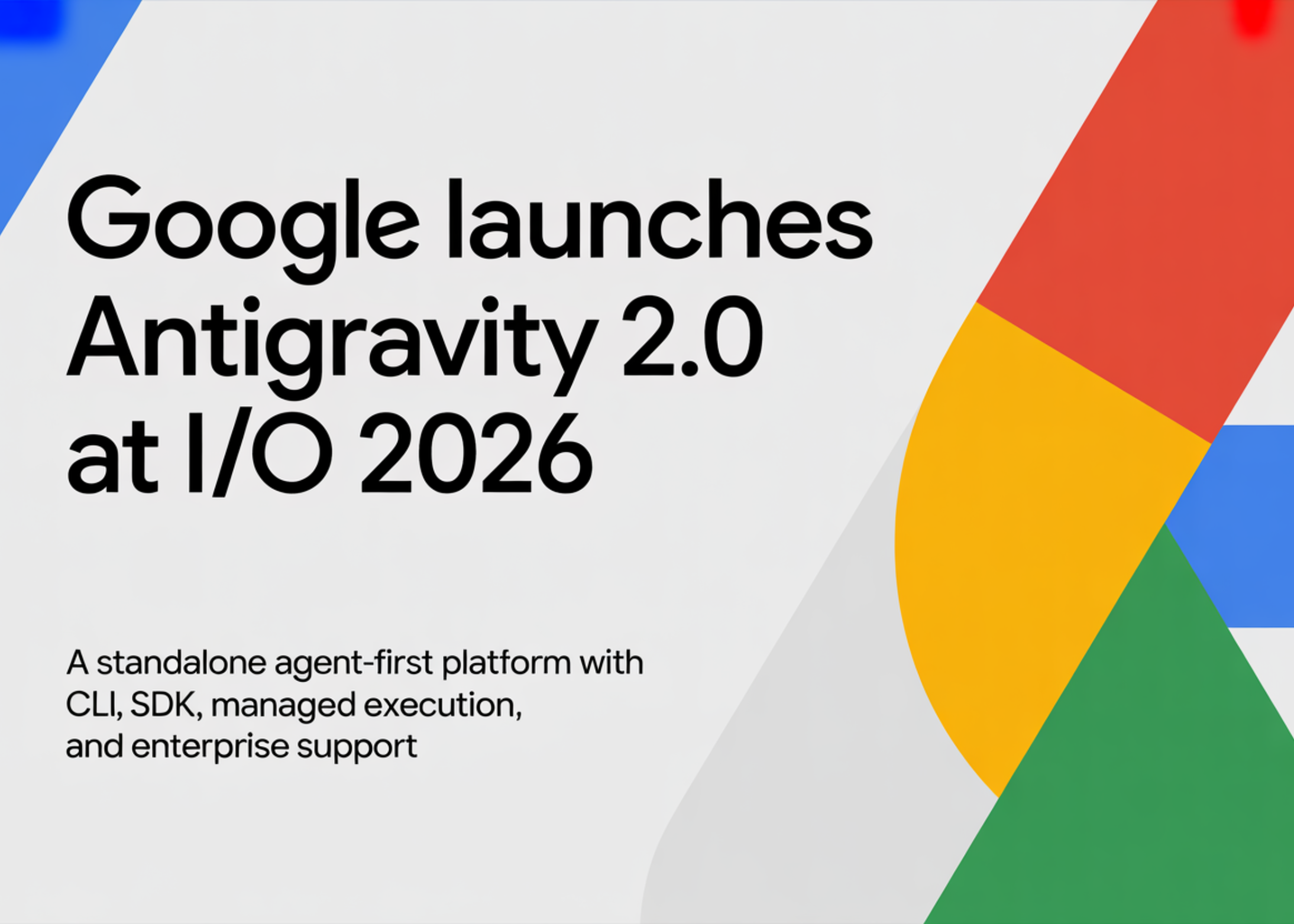
At Google I/O 2026, the company unveiled Antigravity 2.0, marking a major shift from IDE-centric AI tools to a standalone agent-first platform. This release introduces a desktop application, CLI, SDK, managed execution via the Gemini API, and enterprise integration. Below, we answer key questions about this new ecosystem.
What exactly is Google Antigravity 2.0 and how is it different from the original?
Antigravity 2.0 is a standalone desktop application that acts as an agent orchestration hub, replacing the previous IDE-bound approach. Unlike its predecessor, which was tightly integrated into the Antigravity IDE, version 2.0 runs independently and is built entirely around multi-agent workflows. Developers can now orchestrate multiple agents in parallel, trigger background tasks, and integrate with tools like Google AI Studio, Android, and Firebase. The core shift is from assisting within an editor to managing AI agents as first-class development primitives. This means you can design, test, and deploy complex agent interactions without being tied to a specific coding environment.
What are the standout features of the new Antigravity 2.0 desktop application?
The desktop app introduces several powerful capabilities. Dynamic subagents allow you to spawn specialized agents on the fly for parallel task execution. Scheduled tasks let you set background automations—agents that run at predefined times or triggers, turning them into persistent pipelines rather than one-shot tools. Native voice command support has also been added, mirroring features in Gmail and Docs. Additionally, the app provides ecosystem hooks for Google AI Studio, Android, and Firebase, enabling seamless data flow across services. These features collectively transform Antigravity from a simple assistant into a full-fledged automation platform.
How does the Antigravity CLI work, and what does it replace?
The Antigravity CLI is a terminal-based tool for developers who prefer command-line workflows. It uses the same agent harness as the desktop app, so any improvements to core agents automatically benefit both surfaces. This CLI fully replaces the Gemini CLI, preserving critical features like Agent Skills, Hooks, Subagents, and Extensions (now rebranded as Antigravity plugins). It’s lightweight and designed for rapid agent creation without a GUI. For migration, existing Gemini CLI users can transition smoothly—all their scripts and workflows remain compatible. The CLI is ideal for continuous integration pipelines, server-side automation, or developers who live in the terminal.
What is the Antigravity SDK, and who should use it?
The Antigravity SDK provides programmatic access to the same agent harness that powers Google’s own products. Optimized for Gemini models, it lets developers define custom agent behaviors and deploy them on their own infrastructure—whether that’s on-premises, cloud, or edge devices. This is especially valuable for engineering teams building proprietary AI assistants, internal tools, or white-label agent solutions. The SDK supports defining agent logic, managing state, and connecting to external APIs. You can embed Antigravity-style agents into your own applications without relying on Google’s hosted services. It’s a flexible choice for teams that need full control over execution while leveraging Google’s agent orchestration technology.
How does enterprise support work with the Gemini Enterprise Agent Platform?
For organizations, Antigravity integrates with the Gemini Enterprise Agent Platform, simplifying enterprise-scale deployments. This allows Google Cloud customers to connect Antigravity directly to their Google Cloud project, enabling managed execution, access controls, and compliance features. Enterprise support includes priority troubleshooting, dedicated SLAs, and advanced monitoring through Google Cloud’s operations suite. It also provides team collaboration features, versioning of agent configurations, and centralized policy management. This makes Antigravity suitable for regulated industries, large development teams, or any scenario requiring robust governance and audit trails. The enterprise tier ensures that agent workflows can scale securely across an organization.
What role do scheduled tasks and voice commands play in Antigravity 2.0?
Scheduled tasks are a game-changer for automation: instead of manually invoking agents each time, you define cron-like triggers that launch agent workflows automatically. This turns agents into persistent background workers—polling data, generating reports, or maintaining system health. Voice command support adds a natural interaction layer, letting you command agents hands-free while debugging or reviewing logs. Both features align with Google’s broader push toward ambient computing. Combined, they make Antigravity 2.0 not just a development tool, but a platform where AI agents operate continuously, responding to both code-defined schedules and spoken instructions. This reduces friction and enables new use cases like automated incident response or voice-driven prototyping.
What four components form the Antigravity 2.0 ecosystem?
The Antigravity 2.0 release includes four interconnected surfaces: the standalone desktop app, the Antigravity CLI, the Antigravity SDK, and integration with the Gemini Enterprise Agent Platform (including Managed Agents via the Gemini API). These share a unified agent harness, meaning improvements to core agent logic apply across all surfaces. The desktop app offers the richest visual experience; the CLI targets terminal users; the SDK gives programmatic control for custom deployment; and enterprise support provides managed execution for organizations. Together, they form a complete toolchain for building, testing, deploying, and managing AI agents at any scale—from a single developer’s workflow to enterprise-wide automation.