7 Essential Insights into Pin Clustering in .NET MAUI Maps
Tired of your map looking like a pin cushion? If you’ve ever added dozens or hundreds of markers to a map, you know the pain—overlapping, unclickable icons that turn navigation into a guessing game. Starting with .NET MAUI 11 Preview 3, the Map control introduces built‑in pin clustering on Android, iOS, and Mac Catalyst. This feature automatically groups nearby pins into a single cluster when zoomed out, then expands them as you zoom in. Here are seven key things you need to know to master this long‑awaited feature (issue #11811) and clean up your maps for good.
1. Understanding Pin Clustering
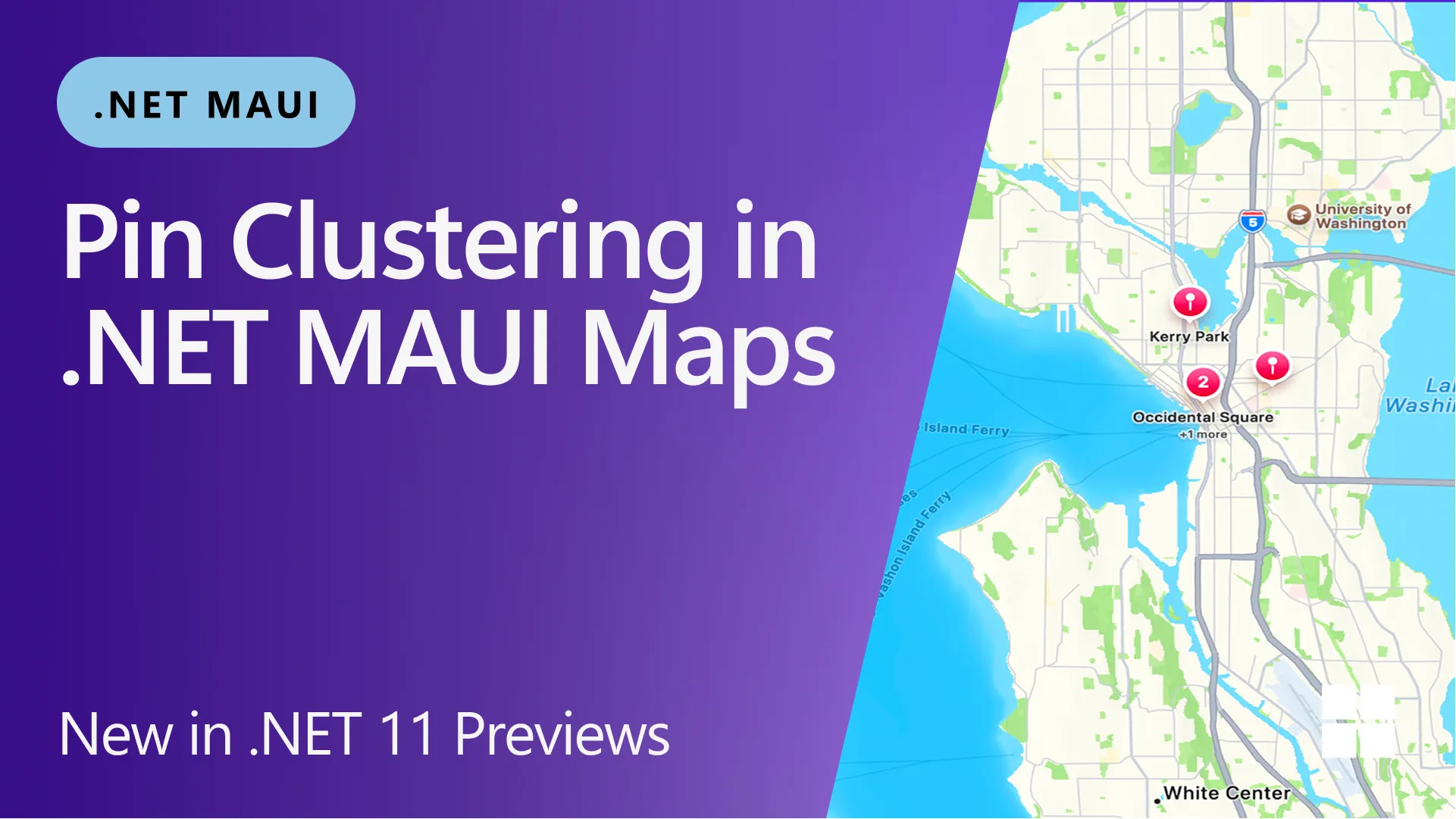
Pin clustering is the process of consolidating multiple map markers that are geographically close into one cluster icon. When you zoom in, the cluster breaks apart to show the individual pins. This solves the visual clutter problem and makes maps more usable. The cluster badge displays a count of pins inside, so users instantly grasp density. Under the hood, .NET MAUI uses different algorithms depending on the platform—custom grid‑based on Android, MapKit’s native clustering on iOS—but the result is the same: a clean, interactive map that scales from a world view down to street level without overwhelming the user.
2. Enabling Clustering with a Single Property
Getting started couldn’t be simpler. Set the IsClusteringEnabled property on your Map element to True:
<maps:Map IsClusteringEnabled='True' />That one line activates clustering for all pins. The Map control automatically groups nearby markers into clusters and shows a numeric badge. You can combine this with other Map features—like zoom controls or overlays—without any extra code. If you need to disable clustering temporarily (for example, during a search), just toggle the property back to False. It’s a zero‑effort way to dramatically improve the user experience on both Android and iOS.
3. Grouping Pins by Category Using Identifiers
Not all pins are created equal. You probably want coffee shops to cluster separately from parks, or hotels to form their own groups. The ClusteringIdentifier property on the Pin class makes this easy. Assign a string identifier to each pin:
map.Pins.Add(new Pin {
    Label = 'Pike Place Coffee',
    Location = new Location(47.6097, -122.3331),
    ClusteringIdentifier = 'coffee'
});

map.Pins.Add(new Pin {
    Label = 'Occidental Square',
    Location = new Location(47.6064, -122.3325),
    ClusteringIdentifier = 'parks'
});
Pins with the same identifier cluster together, while those with different identifiers remain in independent clusters—even if they’re physically next to each other. Pins without an identifier share a default group. This lets you maintain logical separation for different categories, making your map both organized and informative.
4. Handling Cluster Taps
When a user taps a cluster, the ClusterClicked event fires. The event args provide:
- Pins – a list of pins in the cluster
- Location – the geographic center of the cluster
- Handled – a boolean to control default zoom behavior
Use the event to show details or navigate elsewhere:
map.ClusterClicked += async (sender, e) => {
    string names = string.Join('\n', e.Pins.Select(p => p.Label));
    await DisplayAlert('Cluster (' + e.Pins.Count + ' pins)', names, 'OK');
    // To suppress zoom‑to‑cluster: e.Handled = true;
};
By default, tapping a cluster zooms in to expand it. If you set e.Handled = true, you take full control—for example, to show a list of pins in a popup or navigate to a detail page.

5. Platform Notes: Android vs. iOS & Mac Catalyst
Clustering is implemented differently on each platform, but .NET MAUI abstracts the differences. On Android, a custom grid‑based algorithm recalculates clusters as the zoom level changes—no extra dependencies needed. On iOS and Mac Catalyst, the feature leverages Apple’s native MKClusterAnnotation support in MapKit, providing smooth animations and built‑in performance optimizations. The result is a consistent API across platforms with platform‑specific speed and polish. You don’t need to write platform‑specific code unless you want to fine‑tune behavior—the Map control handles everything.
6. Trying It Out: Sample Code and Documentation
To see pin clustering in action, check out the maui‑samples repository. The Maps sample includes a dedicated Clustering page that demonstrates multiple clustering groups and cluster tap handling. You can run it on Android, iOS, or Mac Catalyst and experiment with different identifier combinations. For a full API reference and advanced scenarios—like custom cluster markers or dynamic pin updates—visit the .NET MAUI Maps documentation. The examples are straightforward and easy to adapt to your own projects.
7. What’s New and What’s Next
Pin clustering is a direct result of community feedback (issue #11811) and is available starting with .NET MAUI 11 Preview 3. This feature brings a polished, production‑ready experience to mapping apps. Moving forward, expect further enhancements like custom cluster templates and improved performance for very large datasets. To start using it, install .NET 11 Preview 3 and update your project’s NuGet packages. Your maps—and your users—will thank you for the cleanup.
Pin clustering transforms messy pin‑filled maps into clear, interactive experiences. With a single property to enable it, identifiers for grouping, a simple event for interaction, and platform‑specific performance, .NET MAUI Maps now matches the capabilities of native mapping SDKs. Build smarter, cleaner maps today.