How an Open-Weight Chinese AI Model Outperformed Industry Giants in Code
The Upstart from the East
In a surprising turn of events, Kimi K2.6, an open-weight artificial intelligence model developed in China, has claimed the top spot in a rigorous programming challenge, besting established proprietary models such as Claude, GPT-5.5, and Gemini. The result, reported by the tech news site ThinkPol and widely discussed on Hacker News, has reignited debates about the role of open-source AI and the shifting geography of machine learning innovation.
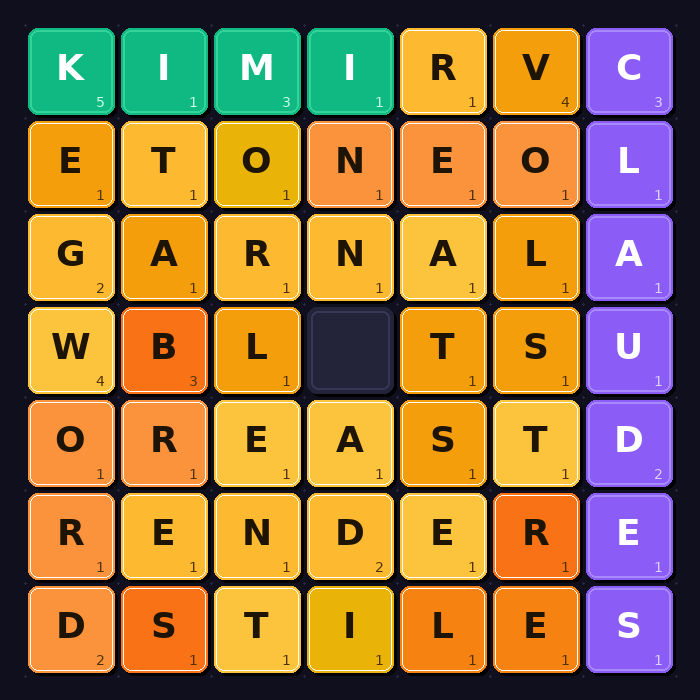
The challenge, believed to be a variant of the SWE-bench or a similarly demanding software engineering benchmark, tasked models with generating functional code solutions, debugging snippets, and completing partial programs across multiple languages. Kimi K2.6 not only matched but exceeded the accuracy and efficiency of its bigger, closed-source rivals, achieving a passing rate that was several percentage points higher than the nearest competitor.
A Closer Look at the Benchmark
While details of the specific test are still emerging, early indications suggest the evaluation focused on real-world programming scenarios—requiring models to understand context, handle edge cases, and produce syntactically correct, efficient code. Such benchmarks are notoriously difficult; even human experts sometimes struggle to achieve perfect scores. Kimi K2.6’s performance therefore marks a notable milestone for open-weight models, which can be freely inspected, modified, and deployed by anyone.
Notably, the model is built on a transformer architecture with an estimated 200 billion parameters, trained on a diverse corpus of code and natural language. Its developers, the Moonshot AI team (the company behind the Kimi line), have emphasized transparency and reproducibility, releasing the weights and training recipes under a permissive license. “This is a victory for the entire open research community,” one commentator noted on Hacker News.
Why This Matters
The upset highlights several key trends. First, it demonstrates that state-of-the-art coding ability is no longer the exclusive domain of massive corporations with vast compute resources. Open-weight models like Kimi K2.6 can now compete head-to-head with—and even surpass—proprietary alternatives that cost hundreds of millions to develop.
Second, it underscores the strategic importance of Chinese AI research. Despite export controls on advanced chips and other geopolitical headwinds, Chinese labs have continued to innovate, producing models that rival or exceed Western counterparts in specific domains. Kimi K2.6’s success may encourage further collaboration between international researchers and Chinese institutions.
Third, the result raises questions about the future of proprietary AI. If open-weight models can beat closed ones on challenging benchmarks, what incentive remains for companies to lock down their technology? The answer may lie in data quality, fine-tuning, and user experience—areas where proprietary models still hold an edge for now.

Reactions and Implications
The Hacker News thread (which generated over 230 upvotes and 100 comments) featured a mix of astonishment and cautious optimism. Several users pointed out that Kimi K2.6’s win might be partly due to the specific nature of the benchmark—which could favor the model’s training distribution. “Every benchmark is a snapshot, not a final verdict,” one commenter wrote. Others praised the model’s open-weights philosophy, noting that it allows independent verification and rapid iteration.
From a practical standpoint, developers and startups stand to benefit the most. With access to a model that rivals the best proprietary solutions, they can build coding assistants, automated testing tools, and educational platforms at a fraction of the cost. As one analysis put it: “Kimi K2.6 is a wake-up call for the big players.”
However, challenges remain. Open-weight models can still be resource-intensive to run and may require specialized hardware. Moreover, the fine-tuning and documentation needed for specific applications still demand skilled engineering. But the trajectory is clear: the gap between the best closed and open models is narrowing fast.
Looking Ahead
Following this breakthrough, the Moonshot AI team has indicated they will release an improved version in the coming months, incorporating feedback from the community. Other Chinese AI labs, such as DeepSeek and Baidu, are also expected to accelerate their efforts in code-generation models. Meanwhile, proprietary model makers like OpenAI, Anthropic, and Google are likely to respond with their own updates—perhaps including larger context windows or better retrieval-augmented generation capabilities.
For now, the programming community has a new champion to explore. Whether Kimi K2.6 can sustain its lead or becomes the first of many open-weight leaders, one thing is clear: the AI coding race just got a lot more interesting. As the article concludes, “This is what happens when transparency meets talent—and the result is a win for everyone.”