The Art of Matching Transistors: Why and How
In many electronic circuits, transistors work in pairs or groups and must be closely matched to ensure balanced operation. While integrated circuits often contain matched pairs on a single die, discrete transistors from the same batch can vary significantly. Understanding the importance of transistor matching and how to achieve it is crucial for reliable circuit performance. Below are common questions about this topic.
What does it mean to match transistors?
Matching transistors means selecting two or more discrete transistors so that their electrical characteristics are as close to identical as possible. In practice, this usually involves measuring parameters such as gain (hFE) and saturation voltage under the same conditions. For example, if you need a pair of NPN transistors for a current mirror, you would test several units and pick those with the closest gain values. The goal is to ensure that when the transistors are used together in a circuit, they behave symmetrically and share the load evenly. This process is especially important when dealing with discrete components, as even transistors from the same production batch can show significant variation.
Why is matching important in circuit design?
When multiple transistors work together—for instance, in a differential amplifier or a push-pull output stage—mismatched devices can cause one transistor to conduct more current than the other. This imbalance leads to inefficiency, increased distortion, and potential thermal runaway in the hotter device. Over time, the overloaded transistor may fail prematurely. By matching gain and saturation characteristics, you ensure that both transistors share the workload equally, resulting in better linearity, improved stability, and longer component life. In critical applications like precision analog circuits or high-fidelity audio amplifiers, ignoring matching can degrade performance to unacceptable levels. Thus, matching is a simple yet powerful technique to enhance circuit reliability and accuracy.
How does matching transistors differ from impedance matching?
Although both terms use the word "matching," they refer to completely different concepts. Transistor matching is about making two or more active devices have nearly identical electrical parameters, such as gain or saturation voltage, so they operate symmetrically. In contrast, impedance matching is a technique used to maximize power transfer from a source to a load by making their impedances equal. Impedance matching is commonly applied in RF and audio transmission lines, whereas transistor matching is used in analog and digital circuit design to ensure balanced operation. Confusing the two can lead to misunderstandings, as the goals and methods are distinct. For instance, a matched pair of transistors in a differential amp is not about impedance but about equalizing their current gain.
What parameters are typically matched?
The most common parameter to match is DC current gain (hFE or β), which measures how many times the base current is amplified to produce the collector current. Matching gains ensures that both transistors in a pair amplify signals equally. Another important parameter is the base-emitter voltage (VBE) at a given collector current, especially in circuits like current mirrors where VBE mismatch directly translates to current errors. Saturation voltage (VCE(sat)) is also sometimes matched in switching applications. Additionally, for high-frequency circuits, matching transition frequency (fT) or parasitic capacitances may be necessary. The choice of which parameters to match depends entirely on the circuit topology and its performance requirements. In practice, gain matching is the most frequently performed test.
Can you match discrete transistors yourself?
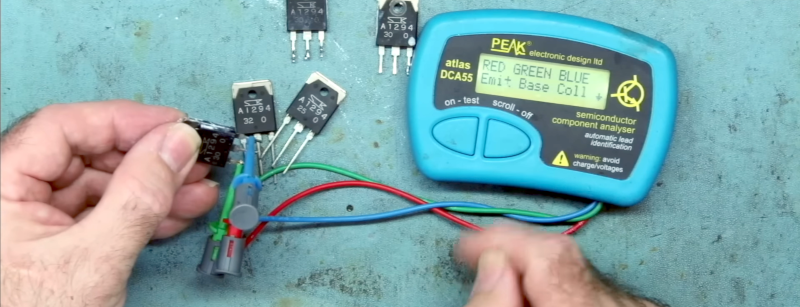
Yes, you can match discrete transistors at home or in a lab using a simple setup. The process typically involves measuring the gain of each transistor with a multimeter that has a hFE socket, or by building a constant-current test circuit. For gain matching, you would test several transistors of the same type and group those with values within 1-5% of each other. For VBE matching, you can apply a fixed collector current and measure the base-emitter voltage with a precision voltmeter. Some hobbyists even build dedicated transistor matching jigs that allow quick sorting. The key is to keep test conditions consistent (same temperature, same current) because transistor parameters drift with heat. While not as accurate as IC fabrication, careful matching of discrete devices can achieve acceptable results for many applications, including audio preamps and analog multipliers.
What circuits require matched transistors?
Several circuit topologies rely on closely matched transistors for proper operation. The most common is the differential amplifier, where mismatched gains or VBE cause offset voltage and drift. Current mirrors also demand matching to ensure the mirrored current accurately equals the reference current. In push-pull output stages (especially class A or AB), matching prevents crossover distortion. Long-tailed pair circuits used in op-amps and comparators benefit from matched transistors. Gilbert cells for analog multiplication and bandgap voltage references also require closely matched devices. Even in digital logic families like ECL, matched transistors are used to maintain noise margins. For less critical applications like simple switches, matching is unnecessary, but in precision analog electronics, it is often mandatory to achieve specified performance.
Is matching necessary for all transistor pairs?
No, matching is only required where circuit performance depends on the symmetry or ratio of transistor characteristics. In many basic circuits like common-emitter amplifiers or logic gates, a single transistor's absolute parameters matter more than relative matching. For example, a simple LED driver or a switching circuit works fine with unmatched transistors as long as each unit meets its minimum specifications. Matching becomes essential when the circuit's precision, linearity, or thermal stability relies on two or more devices behaving identically. If you are building a high-end audio amplifier or a laboratory-grade voltage source, matching is a worthwhile step. However, for general-purpose hobby projects or digital circuits, you can often ignore matching without noticeable performance loss. Always evaluate the circuit's sensitivity to mismatches before deciding whether to invest time in matching.
How does matching relate to resistor or capacitor matching?
The concept of matching is not limited to transistors; it also applies to passive components like resistors and capacitors, especially in bridge circuits and filter networks. For instance, when using two 10% tolerance resistors in a bridge, you might select them so their actual values are very close (e.g., both near 9.2 kΩ instead of one at 9 kΩ and the other at 11 kΩ). This ensures the bridge remains balanced. Similarly, in timing circuits or filters, closely matched capacitors improve accuracy. The principle is the same: you reduce variation between components to achieve predictable and stable circuit behavior. However, passive matching is often easier because you can measure resistance or capacitance directly with a multimeter, whereas transistor matching requires more care due to temperature and current dependence. Both practices are key to building reliable, high-performance analog systems.