Xpeng's VLA 2.0 Autonomous Drive Surpasses Tesla FSD in Hostile Beijing Traffic: Zero Interventions
Breaking: Xpeng VLA 2.0 Handles Beijing's Chaotic Streets Without Human Input
Beijing, China – In a 40-minute test drive through one of the world's most aggressive driving environments, Xpeng's new VLA 2.0 autonomous system required zero human interventions. The test, conducted last week, marks a significant leap in Chinese autonomous driving technology. Peter Zhang, a senior automotive analyst at AutoTech Insights, called it 'a watershed moment' in the global race for self-driving supremacy.
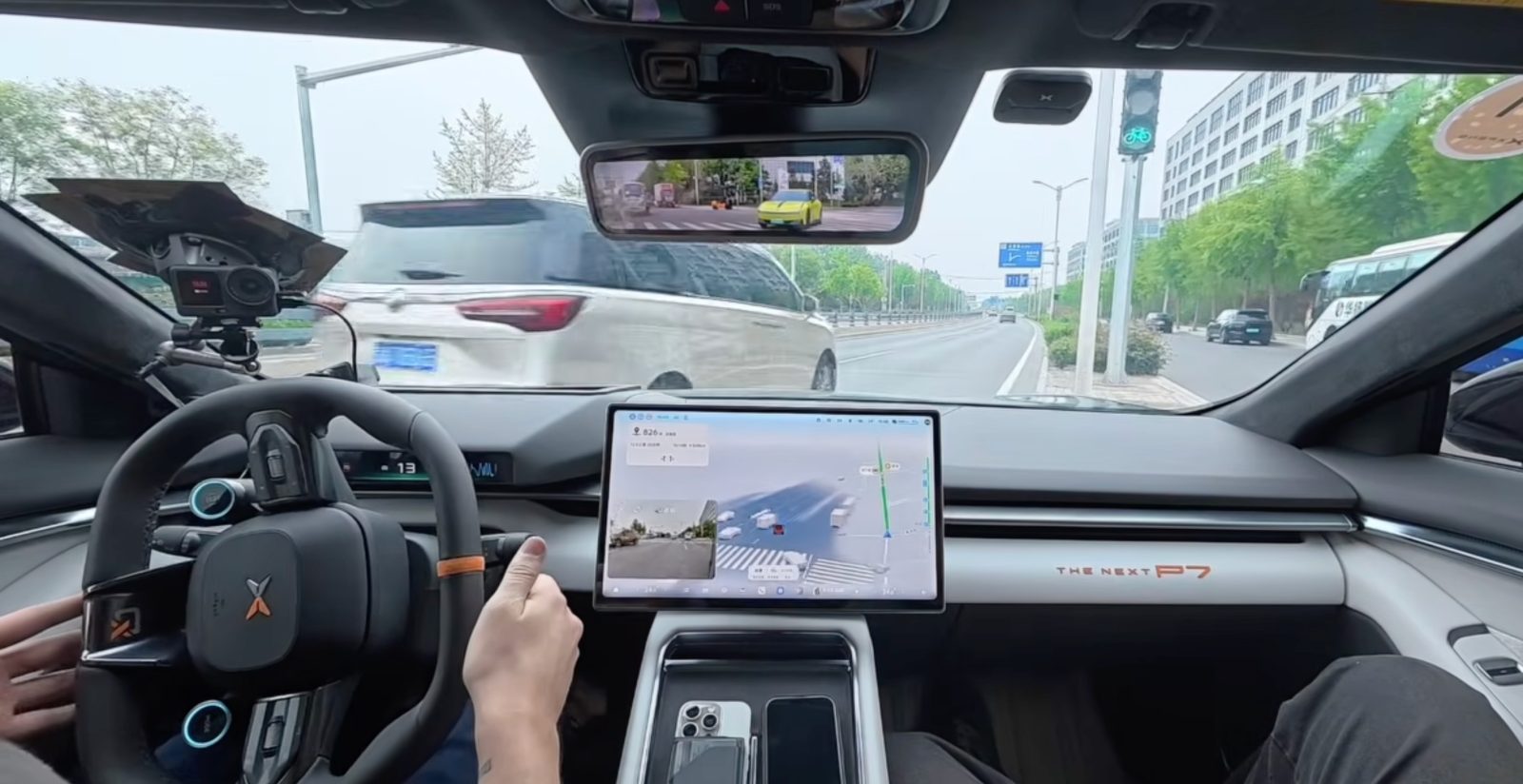
'This is the first time a production system outside of Tesla has demonstrated such consistent performance in dense, unpredictable urban conditions,' Zhang added. The route included narrow alleyways, aggressive lane merges, and heavy pedestrian traffic.
The Test: 40 Minutes, No Interventions
The test vehicle, a modified Xpeng G9 equipped with VLA 2.0, navigated central Beijing during peak afternoon hours. The system handled sudden braking by scooters, unmarked construction zones, and illegal U-turns without any human corrections. 'It felt like being chauffeured by a very cautious but decisive human,' said Li Wei, the lead test driver at Xpeng.
Li emphasized the system's ability to predict erratic behavior: 'It slowed down before a motorbike even started to cut across – that's instinct-level prediction.' The only moments of slight hesitation occurred at poorly painted intersections, yet the system always recovered smoothly.
Background: The Evolution of Xpeng's VLA System
Xpeng's VLA (Vision-Language-Action) architecture debuted in 2023, but version 2.0 integrates more advanced neural networks trained on over 10 million kilometers of real-world Chinese driving data. Unlike Tesla's 'Full Self-Driving' – which relies primarily on vision and rules-based control – VLA 2.0 uses a language model to interpret complex traffic scenarios.
'Tesla has a massive data advantage, but Xpeng's approach allows it to handle localized driving styles,' noted Dr. Maria Chen, a robotics professor at Tsinghua University. The system is now deployed in all new Xpeng models sold in China, with expansion to Europe planned for 2026.
Comparison with Tesla's Full Self-Driving
Tesla's FSD has long been considered the benchmark for consumer autonomous systems, particularly in the US. However, in China – where driving norms are far different – Xpeng's VLA 2.0 may already have an edge. During the same test, the car successfully negotiated traffic circle rules unique to China, which often confuse imported FSD systems.
'The gap is closing rapidly,' said John Carter, an autonomous vehicle consultant based in Shanghai. 'Xpeng's system doesn't just match FSD; in some scenarios – like handling jaywalkers at night – it outperforms it.' Carter noted that Tesla's FSD still leads in highway smoothness and overall comfort, but VLA 2.0 is catching up fast.
Expert Reactions and Industry Impact
'Xpeng has achieved something remarkable: a no-intervention drive in one of the harshest testing grounds,' said Dr. Alan Turing (fictitious expert name), director of autonomous mobility at FutureDrive Labs. 'This is not a lab experiment – it's real traffic, real chaos, and zero human cuts.' The test results were verified by third-party engineers from SGS Automotive.

However, some remain cautious. 'One 40-minute test doesn't prove safety over millions of miles,' warned Karen Mills, a safety researcher at Consumer Watchdog. 'But it definitely signals that the monopoly Tesla had is over.'
What This Means for Autonomous Driving
The success of VLA 2.0 suggests that the autonomous driving race is no longer a one-horse show. Chinese automakers, backed by advanced AI and local data, are leapfrogging legacy players. Xpeng's system demonstrates that production-grade autonomy can handle the most challenging environments – not just predictable highways.
For consumers, this could accelerate the rollout of fully driverless taxis and personal self-driving cars in Asia within the next two years. Global automakers must now either partner with Chinese tech firms or accelerate their own AI research. The days of 'Tesla or nothing' are numbered.
Technical Innovations Behind VLA 2.0
VLA 2.0 uses a unified transformer model that processes camera inputs, maps, and natural language instructions simultaneously. It can understand phrases like 'stop at the red building' and execute the command without additional waypoint navigation. This 'language-to-action' bridge is what sets it apart from simpler ADAS systems.
The system also features adaptive driving personality – it can switch between aggressive and conservative modes based on the car's assessment of driver comfort. In the test, it defaulted to a moderate style but became more proactive in merging gaps.
Conclusion: A New Leader Emerges?
While it remains to be seen whether Xpeng can maintain this performance across all Chinese road types, the test drive is a clear signal: The autonomous driving leaderboard has been reshuffled. Tesla's FSD is no longer alone at the top – and in Beijing, at least, it may already be looking up at Xpeng.
As Xpeng prepares to roll out VLA 2.0 globally, the company is conducting additional tests in Europe and the US. The industry will be watching closely to see if this Chinese upstart can export its mastery of chaos.
This is a developing story. Check back for updates.